
Ramping Up with RFID
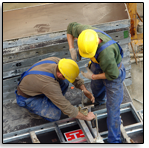 The use of RFID (radio-frequency identification) in the construction industry has many appeals: tracking where tools are located; managing materials throughout the supply chain; and monitoring the workforce in order to make better decisions. For years, contractors and industry professionals have discussed the benefits of such technology in the building market, but only a few construction leaders have implemented the technology into processes. But is this all about to change?
As the price of RFID tags continues to come down and become more affordable, construction software providers are able to develop new and innovative ways to use RFID in construction. Case in point: tool-tracking and workforce-monitoring technology providers continue to come to market with enhanced solutions with RFID.
This will ultimately make it easier than ever before to affix tags to tools, materials, and even workers to improve productivity and reduce risk on a construction project.
As new technology continues to be developed, adoption of the systems increases among some of the large commercial construction firms. For example, Turner Construction, www.turnerconstruction.com, New York, N.Y., is using Workforce Monitor from ADR Software, www.softwareadr.com, Reston, Va., on the Children’s Hospital of Philadelphia project.
With the technology, Turner is able to view where employees are located in order to make decisions about the workforce and locate workers in case of emergency. The software also improves documentation, increases safety awareness, and allows the construction company to better manage risk.
With this particular system, RFID tags are attached to hard hats and ID badges and the data can be tracked through software in the office. Turner is currently using the technology on projects in Philadelphia, Baltimore, Northern Virginia, Denver, New York, and Washington, D.C.
Could RFID soon be more commonly used on construction projects across the country? From tool tracking to material tracking, RFID can help manage construction processes, improving efficiencies and productivity. As more solutions come to market and construction firms more readily implement the technology, this is certainly a trend to watch.