
News
- All
- Green Build
- Training
- Roofing
- Housing
- Projects
- Technology
- People
- Legal
- Events
- Security
- Plant
- Blog
- Products
- Waste
- News
- Jobs
Developing a Strategy for Cloud in Construction
 For IT professionals in the construction industry, cloud computing is creating a certain level of complexities for doing business. Before diving head first into the cloud, contractors need to carefully consider how such technologies will work within the business, creating a strategy for how to move forward with the cloud.
When it comes to cloud computing, there are several different delivery methods including IaaS (infrastructure as a service), PaaS (platform as a service), SaaS (software as a service), and RaaS (resource as a service), as well as many deployment models, which include public cloud, private cloud, and hybrid cloud.
KSA, Qatar drive growth in pre-cast concrete sector
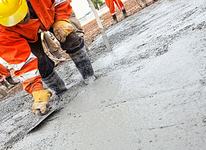 Many factors are driving the growth of the pre-cast concrete sector in the Arabian Gulf, from increased investment in the petrochemicals industry to a growing middle class. Bank of America Merrill Lynch, for example, sees three clear trends pushing the construction-dependent sector to new highs: "First, and most immediately, we believe heavy investment in petrochemicals will now begin to see improving returns due to their global competitive advantage. Second, we believe a shift will require an ongoing need to invest in regional infrastructure. Third, we see a social and economic need for a growing middle class, supporting the growth of consumer sectors."
This augurs well for the pre-cast concrete industry, which is not dependent on a building type but can tap into any part of the construction sector, be it residential, commercial or infrastructure.
Read more: KSA, Qatar drive growth in pre-cast concrete sector
New ‘Outputs’ oriented EHS Training Courses
 Andy Robertson Associates are launching new in-house EHS training courses with a difference, namely ‘Outputs’ oriented bespoke and IOSH accredited training and follow-up coaching that add maximum value to the client’s organisation. They are all carried out in-house on the client’s premises for convenience, cost saving and minimum disruption to their operations.
Before delivery, consultation ensures that what a client really needs as ‘Outputs’ is understood and designed into each course. An example of this may be that a client not only needs delegates to be able to carry out a Risk Assessment, but that they can also use the client’s software applications to type their Risk Assessments into once completed, before issuing them electronically. Building use of the client’s existing applications into the training course saves the client time in having to carry out this function.
Let's hear it for wood, and pointy things
 In September visitors to Timber Expo in Coventry will be able to preview the shortlisted projects for the Wood Awards 2012. This year the competition – celebrating its 10th year – has seen an unprecedented number of entries – so much so that the categories for furniture and architecture had to have the deadline for entries extended to June. In the past Construction National has had its front cover adorned with winning entries of marvellous beauty and fantastic design.
Also new this year the categories have been revamped: a new main category of Small Project has been introduced to separate it from the Private category, and the Conservation/Restoration category has become Repair and Adaptive Re-use, to allow for projects that have undergone "ingenious restoration" while being adapted for other purposes.
Chasing the poor out of ‘nice’ areas – even when they belong there
At the end of last month the NHBC released figures for new home registrations for the second quarter of the year. It makes grim reading. The figures show a decline of 24% in registrations compared to the same quarter last year. Private-sector registrations fell by 10%, driven by a decline for June compared to June last year, although April and May saw slight rises.
The real hammer blow came from public-sector registrations which fell by a massive 42% compared to last year. That was in the face of a soaring in demand to fill the ever-widening gap between housing supply and demand.
Richard Tamayo, the NHBC's commercial director, commented: "As the year progresses we must hope to see a rebound in social housing numbers as providers adapt to new methods of funding."
Read more: Chasing the poor out of ‘nice’ areas – even when they belong there
Cauldron sets hearts afire, and Hear, hear! to Prince Charles
 Like everyone else, I gasped in wonder as the Olympic cauldron hoisted itself into place following the lighting of the flames by nine young athletes: each sponsored by a British Olympian. The cauldron, designed by Thomas Heatherwick – himself a trailblazer – was a masterpiece of thoughtful design, with each 'petal' inscribed with the name of a country which will be given it as a keepsake.
It set me looking at other notable Heatherwick designs, from the UK Pavilion at the 2010 Expo in Shanghai to a design for a café on the front at Littlehampton. The latter is set on a long, thin piece of land between the promenade and a sewer pipe, described by Heatherwick as "the shape of a cigarette". Not 'a cylinder' or anything so prosaic, note.
Read more: Cauldron sets hearts afire, and Hear, hear! to Prince Charles
24/07/2012: Who takes H&S more seriously, and what's after the Games? by Chris Stokes
America is not universally noted for protecting the rights of workers, or for imposing any kind of onerous regulation that can get in the way of business. After all, as Calvin Coolidge DIDN'T say: The business of America is business.
In the UK, on the other hand, we have been traditionally proud of the health and safety record of our industry, particularly the successes we have achieved in reducing accidents in the construction industry.
How perverse, then, that in the same week as an Alabama construction company is fined a six-figure sum for failing to ensure the safety of its worker, the Association of Personal Injury Lawyers (APIL) launched yet another attack on the Government and now the HSE for watering down our own health and safety laws.
Read more: 24/07/2012: Who takes H&S more seriously, and what's after the Games? by Chris Stokes
12/07/2012: Engineering genius goes underground, by Chris Stokes
I'm not usually prone to using this space for a TV review, but I'm going to make an exception this week. In a return to a former life – the first paid writing job I had was as a theatre reviewer – I am going to extol the excellent Channel 5 programme Building the London Underground, broadcast at 8pm on 11 July. It went into great depth on the engineering challenges involved in building underground railway systems that run under major cities, and in particular cities that span major rivers.
Perhaps as amazing is the fact that the upgrading of the Underground that is going on now is biggest of its kind in the world. The programme featured the new station on Canary Wharf, which is being built under the water as there isn't room on the land because of all the skyscrapers.
Read more: 12/07/2012: Engineering genius goes underground, by Chris Stokes
Construction National blog: 18/06/2012
 I have, over the years, spent rather more time in health service buildings than I would have liked. That has to be true of most of us, although sometimes my inside knowledge of hospital layouts and even procedures (the bureaucratic kind, not surgical) has struck even me as being sad. Most of the hospitals and health centres I have spent time in have been dilapidated and not fit for a modern service, usually in a run-down wing at the back of a largely-refurbished hospital, tucked away from public gaze.
We are, according to the NHS, embarked on the "biggest healthcare building programme ever seen in the UK", and largely most health centres and hospital premises are being gradually brought into the 21st century. Major campaigns were fought to retain local facilities at the expense of centralised specialist units, but on the whole the progress achieved has outweighed the loss of local amenity. There have been exceptions, of course: the closure of the A&E unit at my nearest hospital has meant extra work for a far older – and frankly uninspiring – unit at the hospital in the next town, which is itself Victorian in origin.
Construction National blog: 06/06/2012
 Sustainable construction as a principle has come a long way since it was first mooted as a way of keeping stock of the environmental impact of a building. Then, the issues were the amount of recycled material used, the ability to recycle the materials once the building came to the end of its life and the amount of energy used both to construct and to run the building. Developments have come to include 'whole-life sustainability' and 'embedded carbon'.
Recently, however, the concept of sustainability has developed further to encompass social and economic sustainability. This latter has been the necessary result of needing to retain sustainable development as a priority in the face of new economic prosperity and the accompanying philosophical attacks on environmentalism from green sceptics – they know who they are. Social sustainability owes its existence to a more grown-up approach to the environment.
Construction National blog: 25/05/2012
The main construction news of the week happened on 24 May, when Education Secretary Michael Gove announced that 261 schools would receive funding for rebuilding programmes under the Priority Schools Building Programme, out of 587 that applied. A total of £2bn has been allocated to the scheme over the next five years. It replaces the last government's Building Schools for the Future (BSF) programme, which aimed to rebuild or replace every secondary school in England. That would have cost £55bn.
Naturally, as with every competitive arrangement of this nature there were some who were delighted, but more who were outraged. The leader of Sandwell Council in the West Midlands was scathing about the fact that only three of its 17 applications had been successful, describing the scheme as "...a half-hearted botch job which will impact on young kids in a deprived area."
More Articles...
- New name and new identity for Purcell Miller Tritton
- Guard Industry and Osmose Sign Exclusive Agreement For Woodguard Products
- CEMEX Cyclist Safety Initiative in full force at PRECAST 2012 in Leicester
- DRICON Treatment up to the challenge in the Highlands and Islands
- Construction National blog: 15/05/2012